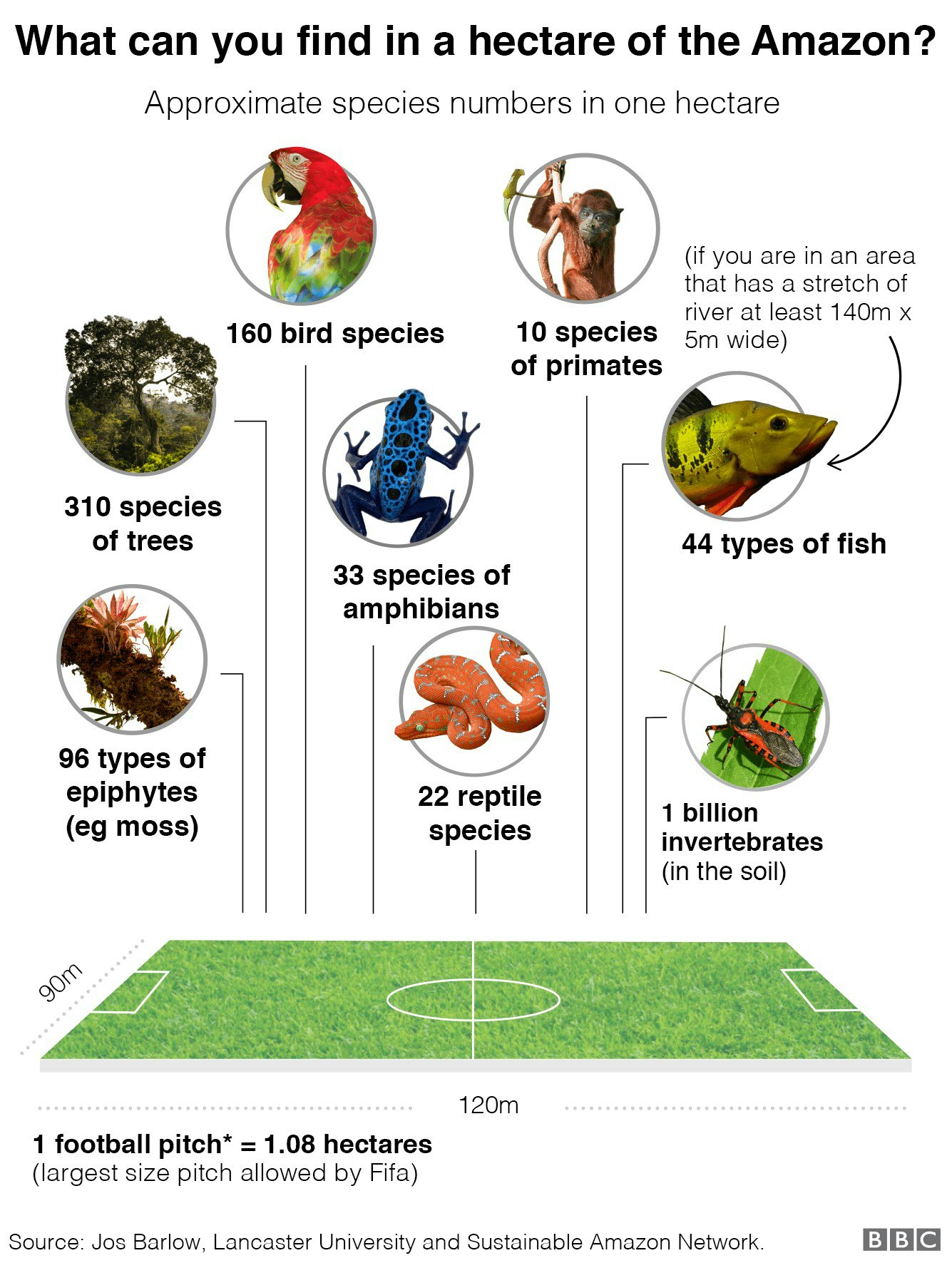
Biodiversity —more than 10 million plant and animal species on the planet— is essential for the climate change fight. Biodiversity is linked to the food supply, human health, clean air, clean water, and healthy soil among other things. Prof David Macdonald, at Oxford University, says “without biodiversity, there is no future for humanity.” “To restore stability to our planet, we must restore its biodiversity,” says Sir David Attenborough in his 2020 documentary “A Life on Our Planet.”
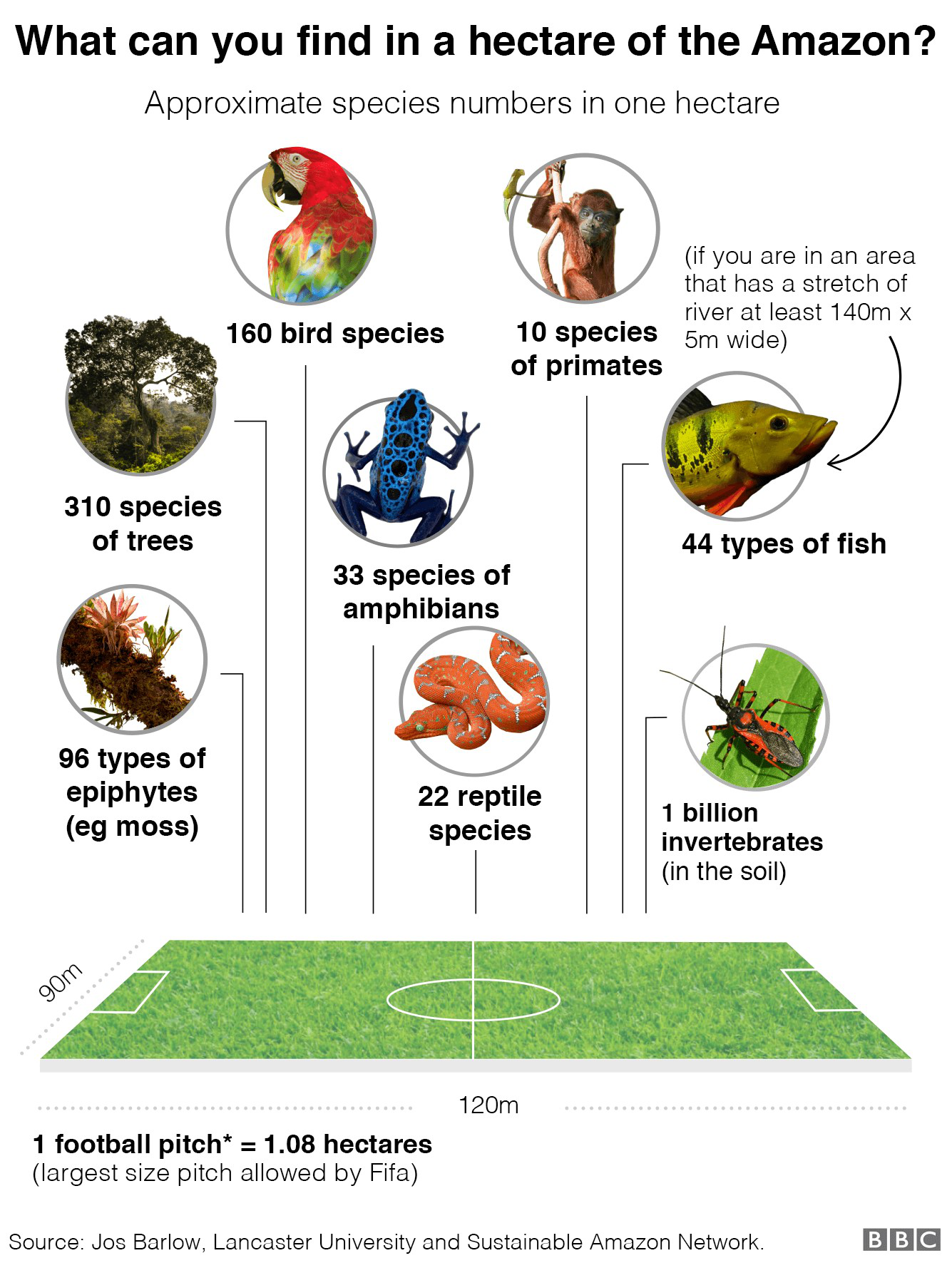
I love this graph published by the BBC to explain the magnitude and the power of biodiversity.
The energy and enthusiasm flowing to combat climate change are off the charts. Although most of the efforts go to scaling emerging carbon removal technologies, and just a small part of those efforts goes to protecting forests and oceans, the best “technologies” nature has for locking away carbon while stopping the biodiversity loss. We must understand that biodiversity and the protection of nature are the Cinderella story of the climate change fight.
Protecting and Restoring Nature is one of the best ways to mitigate carbon emissions. According to the World Resources Institute, “Recently analysis shows that forests are essential to meeting the goals of the Paris Agreement…..Conservation, restoration, and improved management of tropical forests, mangroves, and peatlands could provide 23% of cost-effective mitigation action needed by 2030 to limit global warming by 2°C".
The protection of nature not only helps to combat climate change by absorbing carbon but also, it is the only action that guarantees to stop the biodiversity loss. No even reforestation could guarantee that as “these secondary forests are species and carbon-poor, compared to undisturbed primary forests. Even after as many as four decades, forests that are in recovery still fall behind primary forests in biodiversity and carbon storage.” “Yet forests’ potential for mitigation does not receive commensurate international political attention or financial support.” The latter is the catch as biodiversity and the protection of nature do not have adequate relevance in the climate change fight. For instance, reforestation accounts for only 3% of climate actions. Also, although The Natural Conservancy estimated that the global spending for positive biodiversity outcomes in 2019 was around $130 billion a year, there is still a nature funding gap of $700 billion.